Skip to content

Leadership

v1.0 · 2026

Authority is
entrusted,
not possessed.

Leadership at Grunuss is defined by what it is accountable for — not by what it controls. The architecture below shows how authority is held, distributed, and reviewed during the institution's formative phase.

§ 01 / Premise

GS-2026 / SECT_01

Role follows work.

A title is the trailing record of a responsibility already carried. Appointments at Grunuss are made when the work has defined the shape of the seat — not before. Leadership is treated as moral burden before organisational role; its legitimacy derives not from dominance but from alignment with higher-order responsibility.

The institution is kept small for as long as that discipline requires. The sections below describe how authority is structured, distributed, and held — and the criteria under which any seat is filled.

§ 02 / Authority

GS-2026 / SECT_02

Strategic direction is centralised. Operational execution is distributed.

During the formative phase, Grunuss operates under a deliberately asymmetric authority structure. Two postures organise it. Advisory and oversight bodies will close the structure as the institution matures (see § 06).

A.01

Centralised strategic direction

During the formative phase, strategic authority is centralised to preserve institutional coherence across technical, financial, and ethical dimensions. Centralisation is treated as calibrated to current institutional risk — not as a permanent posture.


A.02

Distributed operational execution

Operational authority is delegated to domain-competent leaders. Decisions that fall within a domain are made within that domain. Cross-domain decisions follow the institutional decision framework (see Governance § 04).

§ 03 / Accountability

GS-2026 / SECT_03

Three dimensions of leadership accountability.

Within the authority architecture above, leadership accountability spans three integrated dimensions. Each dimension is held by a named seat or, where the seat is forming, by the founder until the work has defined the seat's shape.

AC.01

Technical accountability

Direction of the three architectural pillars — quantum-informed simulation, advanced material engineering, and precision additive manufacturing — and the integrity of the predictive-to-produced fidelity chain.

AC.02

Institutional accountability

Governance architecture, decision discipline, and the coherence of the institution across long-horizon programs. Includes oversight of charter, advisory bodies, and external engagements.

AC.03

Research accountability

Methodological standards, validation discipline, and the integrity of the predictive-to-produced fidelity chain. Includes stewardship of the publication framework and the standards of evidence under which research is released.

§ 04 / Doctrine

GS-2026 / SECT_04

Four conditions of appointment.

Each seat — operational or advisory — is held against four conditions. None substitutes for another. The same conditions apply continuously to incumbents, not as a one-time entry filter. Where alignment cannot be sustained, the institution releases the position rather than dilute the standard.

D.01

Demonstrated competence

Mastery of complexity without oversimplification. Intellectual honesty under uncertainty. Evidence found in the work itself, not in proximity to it. Without competence, stewardship becomes symbolic rather than structural.

D.02

Ethical maturity

A settled relationship to consequence, attribution, and dissent. Capacity to hold the moral weight of consequential decisions over time. Recognition that authority is entrusted rather than possessed.

D.03

Capacity under pressure

Sustained judgment when conditions deteriorate. Response to crisis through clarification and disciplined continuation rather than acceleration without analysis. Tested rather than assumed.

D.04

Alignment with institutional purpose

Coherence between personal trajectory and the long-horizon mission. Acceptance of the long-horizon posture, not only the present remit.

§ 05 / Operating principles

GS-2026 / SECT_05

How authority is exercised within the structure.

Within the architecture of § 02 and the criteria of § 04, five operating principles govern how leadership is exercised day-to-day.

OP.01

Authority held with named accountability

Each holder of authority carries explicit accountability for its exercise. Authority without accountability is structurally rejected.

OP.02

Decisions made through the framework

Major decisions follow the institutional decision framework documented in Governance. Personal preference does not override structured evaluation.

OP.03

Informed dissent protected during deliberation

Principled disagreement on technical, ethical, or strategic grounds is treated as a refinement instrument. Once a decision is made through the framework, collective alignment in execution follows.

OP.04

Oversight applies to leadership equally

No seat — including the founder's — is exempt from the discipline it imposes elsewhere in the institution. Oversight without bottleneck is engineered into the structure, not appended to it.

OP.05

Centralisation is calibrated to phase

The current concentration of strategic authority is temporary by design — constitutive of the formative phase, not constitutive of the institution. It diffuses as the institution matures.

§ 06 / Composition

GS-2026 / SECT_06

Roles held and roles forming.

Strategic authority, operational authority, and advisory bodies — the seats currently constituted under the conditions documented in § 04. Each is held with named accountability across the institution's three integrated dimensions.

S.01

STATUS: HELD
Amjad Abu Aisha

Amjad Abu Aisha

Founder & CEO

STRATEGIC AUTHORITY · INSTITUTIONAL ARCHITECTURE

Founder of Grunuss Holdings S.L. Holds strategic authority during the formative phase, accountable for coherence across technical direction, governance, and capital stewardship. Defined the foundational philosophy and the technical pillars the platform is built on.

O.01

STATUS: HELD
Stanley Xie

Stanley Xie

Co-founder · Technical Lead — Simulation

OPERATIONAL AUTHORITY · TECHNICAL ACCOUNTABILITY

Co-founder of Grunuss. Holds operational authority within the technical accountability domain, with primary responsibility for the simulation pillar — solver architecture, methodological fidelity, and the discipline that binds prediction to fabrication.

O.02

STATUS: HELD
George Gasaya

George Gasaya

Institutional Governance Manager

OPERATIONAL AUTHORITY · INSTITUTIONAL ACCOUNTABILITY

Institutional governance manager. Holds operational authority within the institutional accountability domain — governance architecture, decision discipline, charter administration, and the coherence of institutional processes across programs.

A.01

STATUS: HELD
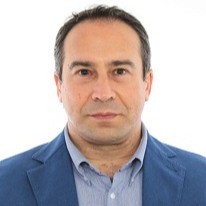
Prof. Dr. David López Durán

Prof. Dr. David López Durán

Technical Advisory — Numerical Simulations

ADVISORY · MULTISCALE SIMULATION · CFD · SOLVER ARCHITECTURE

Provides independent technical advisory on numerical simulations and computational methods — spanning multiscale physics modelling, computational fluid dynamics, and solver architecture. Reviews simulation fidelity, method selection, and the integrity of the predictive-to-produced chain. Independent of execution.

A.02

STATUS: HELD
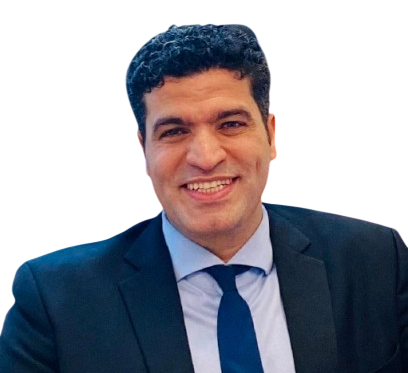
Prof. Dr. Mahmoud Abdel-Hafiez

Prof. Dr. Mahmoud Abdel-Hafiez

Research Advisory — Quantum Materials

ADVISORY · QUANTUM MATERIALS · SUPERCONDUCTIVITY · LOW-TEMPERATURE PHYSICS

Provides independent research advisory on quantum materials — with deep expertise in superconductivity, strongly correlated electron systems, and low-temperature experimental physics. Guides methodological standards, material validation discipline, and the translation of quantum phenomena into engineering applications. Independent of execution.

A.03

STATUS: HELD
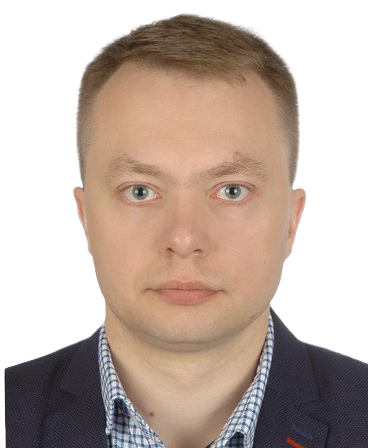
Prof. Dr. Radosław Kycia

Prof. Dr. Radosław Kycia

Institutional Advisory — AI & Hypercomplex Analysis

ADVISORY · ARTIFICIAL INTELLIGENCE · HYPERCOMPLEX SYSTEMS · MATHEMATICAL PHYSICS

Provides independent institutional advisory on artificial intelligence and hypercomplex analysis — bridging advanced mathematical frameworks, computational intelligence, and their application to physical systems. Counsels on AI strategy, algorithmic rigour, and the institution's posture at the intersection of mathematics, computation, and engineering. Independent of execution.

Portraits and full biographies are added as appointments are confirmed. Initial-marks are placeholders, not stylised avatars.